

Abstract: Small and mid-sized industrial operations often face a hidden productivity drain: compressed air systems assembled from mismatched components, squeezed into inadequate spaces, and held together by vulnerable interconnecting piping. The Small Up TAS 4-11kW Screw Air Compressors arrive as a fully integrated answer to that fragmentation — a single package that unites compression, drying, filtration, and control. This article examines how the integrated architecture changes installation logic, how dual-stage filtration and cycling dryer technology deliver consistently clean and dry air, and why the design philosophy behind this compact system reflects a broader shift toward treating compressed air as a managed utility rather than a collection of hardware. It also explores maintenance planning, IIoT-enabled monitoring, and the practical questions that arise when small facilities pursue big-system reliability without the big-system footprint.
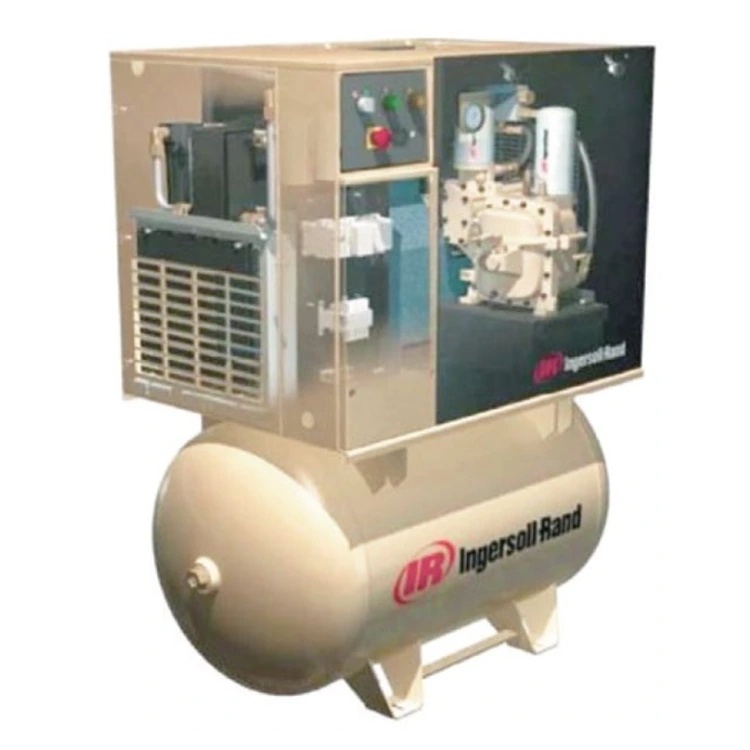
1. The Integrated Architecture: When a Compressor Room Becomes a Single Package
Traditional compressed air installations follow a familiar pattern. A rotary screw compressor is purchased, then a refrigerated dryer is selected separately, then filtration is added, then piping is routed between them. Each component introduces its own connection points, its own footprint, and its own potential failure surface. In facilities where floor space is already contested by production equipment, this accumulation of separate boxes and interconnecting lines becomes a logistical burden that quietly erodes the benefits of compressed air as a utility.
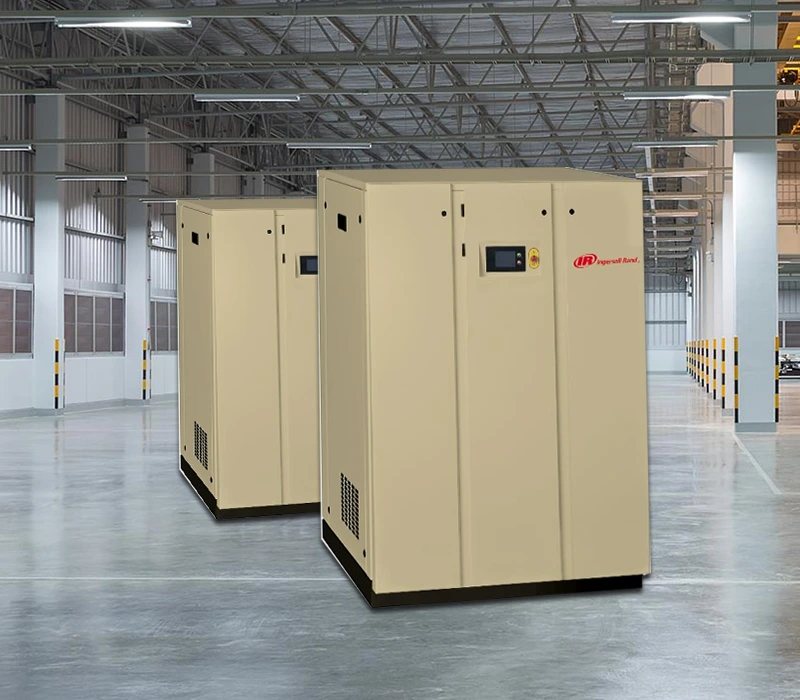
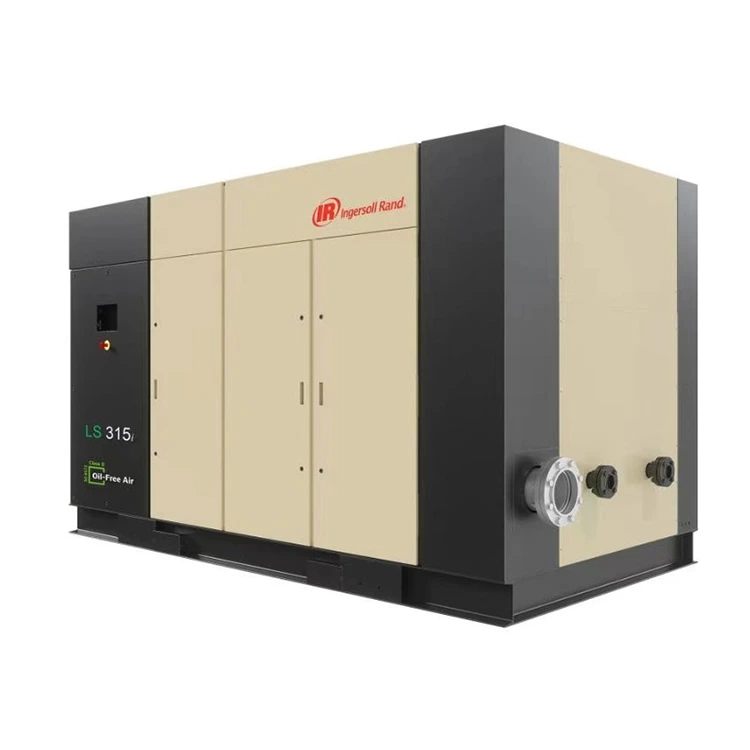
The Small Up TAS 4-11kW Screw Air Compressors approach the problem from the opposite direction. Compression, drying, filtration, and control are engineered as one system from the outset, not assembled after the fact. The result is a package that occupies a footprint closer to what a standalone compressor would demand, while delivering the air quality of a multi-component treatment train. This is not merely a space-saving convenience; it changes the installation logic entirely.
Why Fewer Connections Matter More Than Fewer Components
Every threaded junction, every flanged coupling, and every length of interconnecting piping represents an opportunity for a pressure loss or a leak. Industry guidance on compressed air piping consistently emphasizes that leak-prone threaded junctions and improperly supported runs are among the most common sources of system inefficiency [11†L46-L50]. When the dryer and filtration stages are integrated into the compressor package, those interconnecting lines disappear. The system that reaches the point of use is cleaner not because the components are superior in isolation, but because the architecture eliminates the weak links between them.
This principle extends to cooling as well. Integrated packages route cooling air through a managed path rather than relying on the ambient conditions of a crowded compressor room. The design intent is to ensure that cooling performance does not degrade simply because the installation site was less than ideal.
Installation Flexibility as an Operational Advantage
Because the package arrives factory-assembled and tested, installation time shifts from component coordination to placement and connection. For operations that need to bring air capacity online quickly — a packaging line expansion, a new workshop bay, a temporary production surge — that reduction in installation complexity translates directly into reduced disruption. The integrated format also makes it practical to locate the air system closer to the point of use, which shortens distribution runs and reduces the pressure losses that accumulate over distance.
2. Air Quality as a Design Outcome: Dual Filtration and Cycling Drying
Compressed air quality is often discussed in terms of filter ratings and dew points, but the practical question is simpler: does the air reaching the tool or process contain the moisture and oil that accelerate wear and corrode piping? The integrated treatment center in this class of equipment answers that question through a two-stage filtration path and a refrigerated drying stage that are matched to the compressor's output rather than selected independently.
The Two-Stage Filtration Path
The filtration pack is designed to remove particulate down to 1 micron and oil aerosols down to 0.01 micron. Those figures correspond to the territory of high-efficiency coalescing filtration, where the objective is not merely to capture visible contaminants but to protect downstream equipment from the fine aerosols that deposit on internal surfaces over time [3†L18-L20]. The two-stage arrangement allows each stage to focus on a different contaminant profile, which extends element life and keeps pressure drop lower than a single overworked filter would allow.
The practical consequence is that tools, valves, and pneumatic actuators receive air that is less likely to leave oily residues or particulate films on precision surfaces. In facilities that operate air-powered equipment continuously, that difference in air quality shows up not as a dramatic failure but as a slower rate of wear — and slower wear is what translates into longer service intervals and fewer unplanned stoppages.
Cycling Dryer Logic and the Duty Cycle Problem
Refrigerated dryers have traditionally run continuously, holding the refrigerant circuit active regardless of whether air demand is high or low. Cycling dryer designs change that behavior: the dryer shuts off when the compressor stops, so the drying function follows the actual duty cycle of the air system rather than running at full effort during idle periods [12†L32-L37]. For operations that do not consume air around the clock, this matching of drying activity to demand is a meaningful operational refinement.
The dryer also serves a protective function beyond moisture removal. Condensation in compressed air piping is a direct contributor to internal corrosion, and corrosion particles become contaminants that travel downstream. By keeping the pressure dew point under control, the drying stage reduces the conditions that allow pipe wall degradation to begin.
| Filtration stage | Two-stage coalescing and particulate removal |
| Particulate removal rating | Down to 1 micron |
| Oil aerosol removal rating | Down to 0.01 micron |
| Dryer type | Cycling refrigerated, compressor-linked operation |
| Heat exchanger construction | Stainless steel brazed, low pressure loss |
| Condensate management | Solenoid drain with high-efficiency moisture separation |
3. Maintenance Rhythms for Compact Integrated Systems
Integrated packaging simplifies installation, but it does not eliminate the need for disciplined maintenance. In some respects, it raises the stakes: when compression, drying, and filtration share a single enclosure, a neglected filter or a clogged drain affects the entire air treatment chain rather than just one isolated component. The maintenance approach that suits these systems is therefore built around inspection frequency and condition awareness rather than a rigid calendar alone.
Daily and Weekly Attention Points
The highest-value maintenance actions are often the simplest. Checking oil level before startup, confirming that condensate drains are functioning, and listening for unusual valve noise during a brief walk-around take only minutes but catch the conditions that precede most avoidable failures [8†L27-L31]. In compact packages, these checks are easier to perform because the serviceable components are consolidated rather than scattered across a room.
Filter and Lubricant Intervals
Air filter replacement is commonly scheduled around 4,000 hours of operation, though dusty or chemically challenging environments may justify shorter intervals. Oil and oil separator changes typically follow an annual or approximately 8,000-hour cycle, with oil sampling used to confirm that the lubricant remains within specification [8†L28-L35]. The point of sampling is not to replace the manufacturer's guidance but to adapt it to the actual conditions the machine experiences.
- Daily: verify oil level, inspect condensate discharge, and note any change in operating sound or vibration.
- Weekly: review pressure readings and inspect visible piping and connections for signs of oil mist or moisture.
- At 4,000 hours: assess air filter condition and replace if pressure drop has increased or the element is visibly loaded.
- At 8,000 hours or annually: change lubricant and oil separator, supported by oil sample results.
- Continuously: treat any new leak, however small, as a maintenance trigger rather than a background annoyance.
4. The Digital Layer: Monitoring and Predictive Discipline
The integration of compression, drying, and filtration into a single package creates a natural data concentration point. Instead of monitoring separate controllers for each stage, operators can observe the system as a whole. That consolidated view is the foundation for condition-based maintenance, where decisions are driven by observed trends rather than by the assumption that a fixed interval will always be appropriate.
From Fixed Intervals to Observed Conditions
IIoT-enabled monitoring in compressed air systems has moved beyond simple remote readouts. Contemporary approaches use continuous data streams to establish baselines and flag anomalies — a rising discharge temperature, a pressure drop that develops gradually across a filter, or a condensate drain cycle that no longer matches expected behavior [4†L6-L12]. For small integrated systems, even a modest monitoring layer can provide early warning that would otherwise be missed until a breakdown occurs.
The value of this discipline is particularly clear in facilities without dedicated maintenance staff. A trend alert that prompts a filter change before pressure drop affects production is far less disruptive than an unexpected shutdown during a peak shift. The monitoring layer does not replace the maintenance technician; it directs attention to the component that actually needs it.
What to Watch in an Integrated Package
Because the treatment stages are linked, monitoring should follow the air path rather than treating each component in isolation. Inlet filter condition influences compressor load; dryer performance influences downstream moisture levels; and condensate management affects both. A useful monitoring routine tracks the relationships between these stages, not just the individual readings. The Small Up TAS 4-11kW Screw Air Compressors consolidate those relationships into one operational envelope, which makes the monitoring task more coherent even as it raises expectations for data visibility.
5. Matching the Integrated Package to Real Facility Constraints
The decision to adopt an integrated air system is ultimately a decision about fit. A facility with abundant floor space and an existing central compressor room may have less reason to prioritize packaging density. But for workshops, small manufacturing cells, laboratories, and retrofit projects where every square meter is accounted for, the integrated format resolves a set of constraints that separate components tend to aggravate.
Capacity matching is equally important. The 4–11 kW range covers a band of demand profiles, from intermittent use in a small workshop to more continuous operation in a compact production line. Selecting within that range requires an honest assessment of duty cycle, simultaneous tool usage, and the air quality class that downstream equipment actually requires. An oversized system wastes energy at part load; an undersized system forces the compressor to run beyond its comfortable operating envelope. The integrated architecture does not remove the need for that assessment — it simply ensures that once the assessment is made, the treatment stages are already matched to the compressor rather than left to a separate procurement exercise.
Noise is another constraint that integrated packaging addresses directly. Quieter operation allows the air system to be placed closer to the work area without creating a separate acoustically treated enclosure. That proximity, in turn, shortens piping runs and reduces the pressure losses that accumulate over long distribution paths.
For organizations that have previously treated compressed air as a background utility, the integrated approach encourages a more deliberate operational posture. The system is visible, consolidated, and easier to monitor as a whole — which makes it easier to hold to a performance standard rather than waiting for a failure to prompt attention.
6. Frequently Asked Questions
Does integrating the dryer and filters into the compressor package make maintenance more difficult?
Not inherently. The serviceable components remain accessible, and consolidation means the technician does not need to move between separate units or trace interconnecting piping to locate a filter or drain. The key is to follow the manufacturer's access guidance and to keep the package surroundings clear so that panels and drains can be reached without obstruction.
How does a cycling refrigerated dryer differ from a non-cycling dryer in everyday operation?
A cycling dryer shuts off its refrigerant circuit when compressed air demand falls and the compressor stops, while a non-cycling dryer continues to run. In facilities with variable or intermittent air demand, this behavior aligns drying activity with actual use rather than running continuously during idle periods. The result is a closer match between energy use and the work being performed.
Can an integrated system be installed against a wall or in a corner?
Integrated packages are often designed with installation flexibility in mind, but specific clearance requirements depend on the model and its cooling and service access needs. The manufacturer's installation guidance should always be followed regarding minimum clearances for ventilation, panel opening, and drain access. When those requirements are met, the compact footprint makes wall-adjacent or corner placement practical in many cases.
What air quality class can this type of system achieve?
With two-stage filtration removing particulate to 1 micron and oil aerosols to 0.01 micron, supported by refrigerated drying, the system is designed to deliver clean, dry compressed air suitable for general industrial tool and equipment protection. The appropriate ISO 8573-1 class depends on the specific downstream application, and the filtration and drying stages should be matched to that requirement.
Is IIoT monitoring necessary for a small integrated compressor?
It is not strictly necessary, but it changes the maintenance posture from reactive to informed. Even basic trend monitoring of discharge temperature, pressure drop across filters, and condensate behavior provides early indicators that allow maintenance to be planned rather than improvised. For facilities without on-site technical staff, that visibility can be especially valuable.
Ready to simplify the air system footprint without compromising air quality?
Tell Contact Us about your duty cycle, space constraints, and downstream air quality requirements, and the Small Up TAS 4-11kW Screw Air Compressors can be assessed against the realities of your facility rather than a generic specification sheet.
GDK supports integrated air system selection with application-focused guidance.